Dragon Food Chain
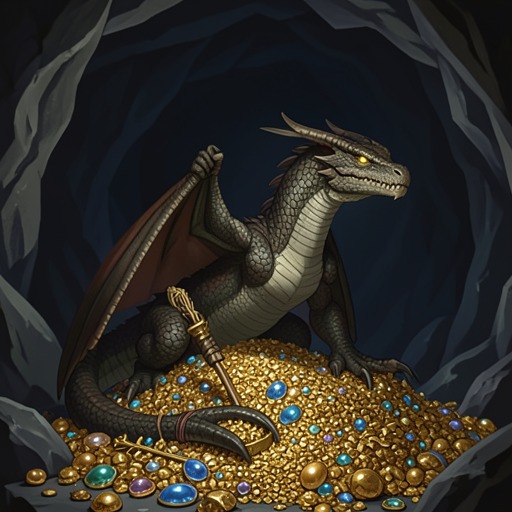
Vainqueur the DragonDragon Food Chain is Vainqueur Knightsbane’s governing theory of value, hierarchy, and survival. More than a metaphor for predation, it is a practical social doctrine: every creature occupies a place according to its usefulness and preciousness, and those below a stronger being may become food when necessity demands it. The concept organizes Vainqueur’s treatment of his hoard, servants, allies, enemies, and the wider world, while the story repeatedly exposes the comic and ethical contradictions produced when a dragon’s instinctive worldview meets organized monster society.
Definition and Hierarchy
Dragon Food Chain begins with Vainqueur Knightsbane’s conviction that dragonkind stands at the summit of creation. After awakening from a fifty-year nap and discovering that thieves still threatened his hoard, he dismissed the possibility that dragons might need an external class system, reasoning that the supposedly supreme species would have unlocked such power long before. His pride is immediately rewarded by the system when he gains a level in the Noble class through his ego and dragon bloodline. The episode links rank, self-conception, and power: Vainqueur’s belief that he is naturally superior becomes an actual source of advancement.
The food chain is also a ranking of preciousness. Vainqueur explains that the preciousness rating determines a being’s position in the chain, with each member allowed to eat those below it if hunger leaves no alternative. The rule is presented to Victor Dalton as minion management, but its implications are much wider. A servant is not simply a subordinate; a servant is a ranked resource whose protection depends on its place above other possible meals and whose ultimate security is never absolute.
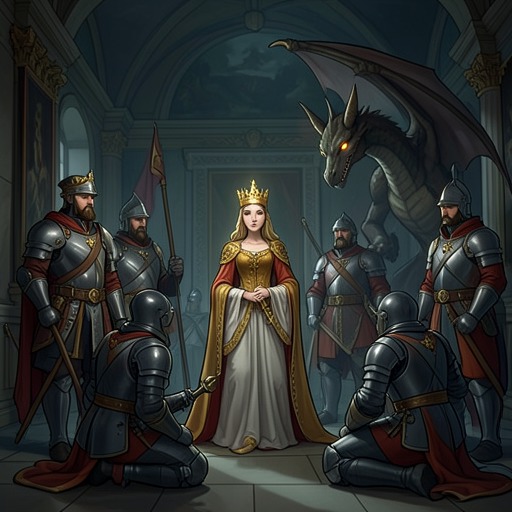
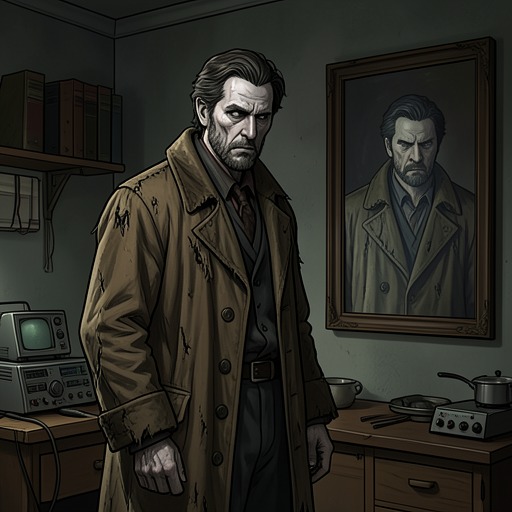
Victor occupies an unusually elevated position within this hierarchy. Vainqueur places him immediately beneath the dragon and above princesses, describing him as almost an honorary part of the hoard. That status makes Victor valuable, loyal, and vulnerable at once. Vainqueur insists that he would not eat him unless food and other minions were unavailable, yet the reassurance preserves the central threat rather than removing it. The chief of staff is treasured precisely because he is useful, and usefulness exists within a system that still recognizes consumption as the final emergency measure.
Minions, Labor, and Institutional Use
The food-chain doctrine governs the structure of Vainqueur’s household. Red describes the chief of staff as the highest echelon of the minion pecking order, an honor combining strength, cunning, loyalty, and enforcement. Vainqueur’s promotion of Victor to chief of staff and living signature therefore has both administrative and biological meaning: Victor becomes the dragon’s principal agent while receiving a position near the top of the minion hierarchy.
The Class System converts that relationship into measurable advancement. Victor gains the Monster Squire class after becoming Vainqueur’s chief enforcer, receiving increases to health, spirit, strength, vitality, skill, agility, intelligence, charisma, and luck. Later, fearlessly leading monsters against superior opponents earns him seven more levels in Monster Squire, along with Monster Lifeforce (Red Dragon), Monster Rider, and Monster Insight. The system thus rewards service to monsters as a form of combat progression. What begins as a dragon’s personal hierarchy becomes a repeatable institution capable of training, empowering, and deploying a body of minions.
The doctrine also turns waste into value. Vainqueur rejects Victor’s practice of leaving meat, monster parts, and corpses for animals and orders him to create a profitable trade from the refuse. Victor is expected to sell junk, monster parts, and corpses, manage class progression, train the Kobold Rangers, and recruit more labor. The dragon’s appetite therefore produces an economic program: what cannot be consumed immediately can be converted into money, and money can return to the hoard. Food-chain logic expands into resource management.
This logic reaches its most developed institutional form in Nethermart, a fiendish magic-item shop open to monsters and mortals. The shop accepts souls as collateral when customers cannot pay in coins and advertises discounted weapons for the coming war with Maure. Its existence shows how the dragon’s valuation system can coexist with commercial structures. The chain does not abolish exchange; it places exchange beneath the larger principle that every being and object must be assessed for use, price, loyalty, or consumption.
Reproduction, Wealth, and Species
Vainqueur applies the food chain to reproduction as well as labor. He teaches Victor that a creature seeking a mate should display the size of its hoard before asking to breed, since wealth signals fitness and prevents paupers from raising eggs. The advice treats courtship as a competitive demonstration of stored value, with treasure functioning simultaneously as property, status, and reproductive credential.
Vainqueur distinguishes dragons from shorter-lived creatures in this matter. He has no desire to place his eggs in another dragon, because additional dragons would create future competition for his hoard. For creatures such as Victor, however, reproduction is necessary because they die frequently and must perpetuate their species before extinction. The distinction reveals a hierarchy of time as well as species: dragons possess enough longevity and power to regard reproduction as a threat to accumulated wealth, while lesser beings must reproduce to preserve continuity.
The same principle helps explain Vainqueur’s attachment to his servants. Minions are replaceable in theory, but recruitment is difficult, training is laborious, and abandonment has already made him paranoid. After goblin watchers disappear and later servants go missing, Victor is pushed toward full-time minion management. The dragon’s demand for a larger workforce is not compassion; it is an attempt to stabilize the lower levels of his food chain.
Speciesism and Moral Contradictions
Vainqueur’s doctrine openly permits the eating of sentient beings. Jolie argues that manlings and other sentient creatures possess souls and that eating them or abducting their princesses is morally wrong. Vainqueur accepts an exception for elves, exposing the selective and arbitrary character of his morality. Victor points out that elves are people too, but the dragon’s response remains inconsistent with any universal principle: compassion is extended according to category and preference rather than shared personhood.
The contradiction becomes sharper when Vainqueur rejects a proposal to exterminate the mortal races. A fairy offers him rewards in fairy gold and mortal flesh for joining a campaign of carnage, but Vainqueur refuses because mortals are his favorite food and because eliminating them would destroy his supply of coins and princesses. His objection is logistical and economic, not humanitarian. He preserves the races he intends to exploit, demonstrating that the food chain can oppose genocide while still denying equality.
Vainqueur also claims that every creature has the fundamental right to be eaten by him. In his view, discrimination among prey is more offensive than predation itself, because choosing only certain targets would make him resemble the manlings he despises. This grotesque formulation converts domination into a purported universal right. Equality exists, but only as equal eligibility for consumption beneath the dragon.
War and Narrative Significance
The food chain becomes a language of mobilization during the War of the Hoard. Vainqueur distinguishes the campaign against Furibon from ordinary hunting because Furibon is identified as evil and must be destroyed. The repeated declaration turns appetite into a political slogan: the dragon’s war is framed as defense of the hoard, enforcement of a moral order, and removal of a rival predator.
Victor recruits one hundred kobolds and seeks experienced representatives among other creatures, including a troll, a dryad, and a golem. Vainqueur declares that he does not discriminate because all creatures are equally inferior to him and all may become emergency food. The statement is both recruitment rhetoric and a precise summary of his worldview. Diversity is tolerated within the army, but not as equality; different species may serve together because they occupy the same subordinate relationship to the dragon.
Even moments of celebration reveal the chain’s consequences. After a Bragging Day, Vainqueur finds the surrounding area devastated, with homes overturned and sheep dead, then summons the Kobold Rangers, gnolls, mimics, and other servants to restore order. The feast and destruction reaffirm his supremacy, while the servants inherit the work of managing its aftermath. The system therefore produces both spectacle and administration: one being’s appetite becomes many others’ labor.
Dragon Food Chain is ultimately the book’s most concentrated expression of Vainqueur’s comic authoritarianism. It explains why he can value Victor without recognizing Victor’s security, organize monsters while calling them inferior, oppose extermination while defending predation, and transform corpses into commerce. The concept gives biological instinct the form of law and turns the dragon’s hoard into a model of society: wealth determines preciousness, preciousness determines rank, rank determines protection, and hunger can expose the violence beneath every apparent bond.